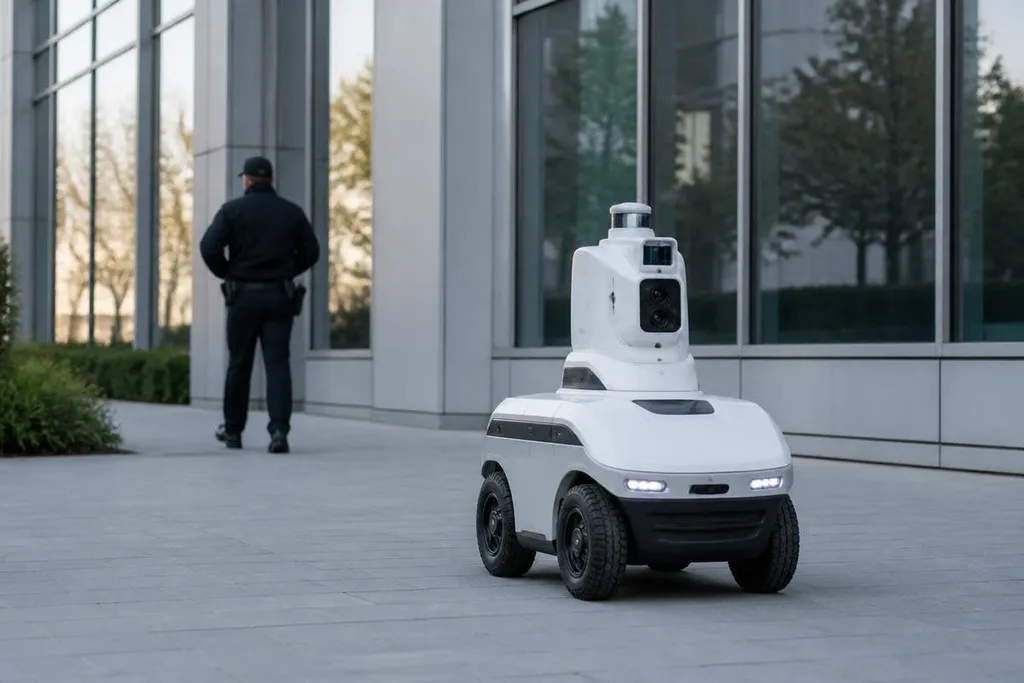
A security robot can patrol a site, send video to a control room, and alert staff when its sensors detect a problem. That gives companies several ways to make money beyond selling hardware to a security manager.
For a buyer, the main question is practical: does the robot fill a gap in patrol work, remote monitoring, or site response? The answer depends on the location, the task, and who remains responsible when the robot finds something.
- Patrol work: A mobile robot can follow set routes and report changes in its surroundings.
- Remote monitoring: A control-room team can review video and speak through the robot when a site needs attention.
- Service revenue: Maintenance, software, training, and robot operation can create income after the sale.
Sell a service instead of a machine
A company can sell security robots as a managed service. The customer pays for patrol hours, system upkeep, and access to a remote operations team rather than buying the robot outright.
That model fits sites that need coverage but don't have staff to operate another system. A provider could install the robot, set patrol routes, review alerts, replace worn parts, and send a human guard when the situation needs one.
The work still needs clear limits. A robot can report a person at a gate or an open door, but a trained person must decide what action is safe and lawful. The service contract should state who reviews alerts, how quickly they respond, and who pays for repairs.
Build around the sensor package
The robot itself is only one part of the sale. Cameras can support video checks, thermal sensors can help spot heat changes in dark areas, and microphones can give operators more context during a remote call.
Each sensor creates a separate service need. A site may pay for a basic patrol package, then add night monitoring, two-way audio, or checks around equipment that must stay within a set temperature range.
This also creates work for system integrators. They can connect the robot with access control, alarm panels, lighting, and a security operations center.
The robot then becomes one source of alerts inside a larger system, rather than a stand-alone product that staff must check by hand.
Paid security work turns a robot’s detection range and alert rate into a service question. Robot24.com robotics coverage can help you compare the companies, deployments, prices, and limits behind that service before the next section looks at the data it collects.
Data creates value, with rules attached
A patrol robot can record time-stamped video, sensor readings, route data, and alert history. A site owner may use those records to review incidents, check whether patrols ran as planned, or find areas where lighting and access controls need work.
That data also creates risk. Companies must set rules for storage, access, retention, and sharing before the robot starts recording. Privacy laws and workplace rules may limit where cameras can point and how long footage can remain available.
The business that handles this work needs more than a robot technician. It needs clear data controls, staff training, and a process for checking false alerts. A sensor that sends too many weak alerts can make the service harder to use, even when the robot completes its route.
Where the limits shape the market
Security robots work best on sites with repeatable routes, clear boundaries, and a nearby person who can act on an alert. Large warehouses, parking areas, campuses, and fenced work sites may fit that pattern.
Crowded public areas create harder problems. People may block the route, weather may affect sensors, and a robot may need help around stairs, loose cables, or unexpected objects. Remote operation can cover some cases, but that adds staff cost and network needs.
I’d build the business around a human-led service, with the robot handling repeat patrol work and people handling judgment, response, and exceptions.
A practical business check
Before investing in a security robot service, check these points:
- Define the patrol: Write down the route, hours, surfaces, lighting, and events the robot must report.
- Price the people: Count remote operators, site responders, training time, and holiday coverage.
- Test the handoff: Set the exact process from robot alert to human review and on-site action.
- Check the data: Decide where video and sensor records live, who can see them, and when they are deleted.
- Plan repairs: Set response times for battery faults, sensor damage, network loss, and blocked routes.
The strongest business case will come from a service that measures completed patrols, response times, false alerts, and repair costs. Until those numbers are known at a real site, the robot is a trial system rather than a finished security business.